

Introduction
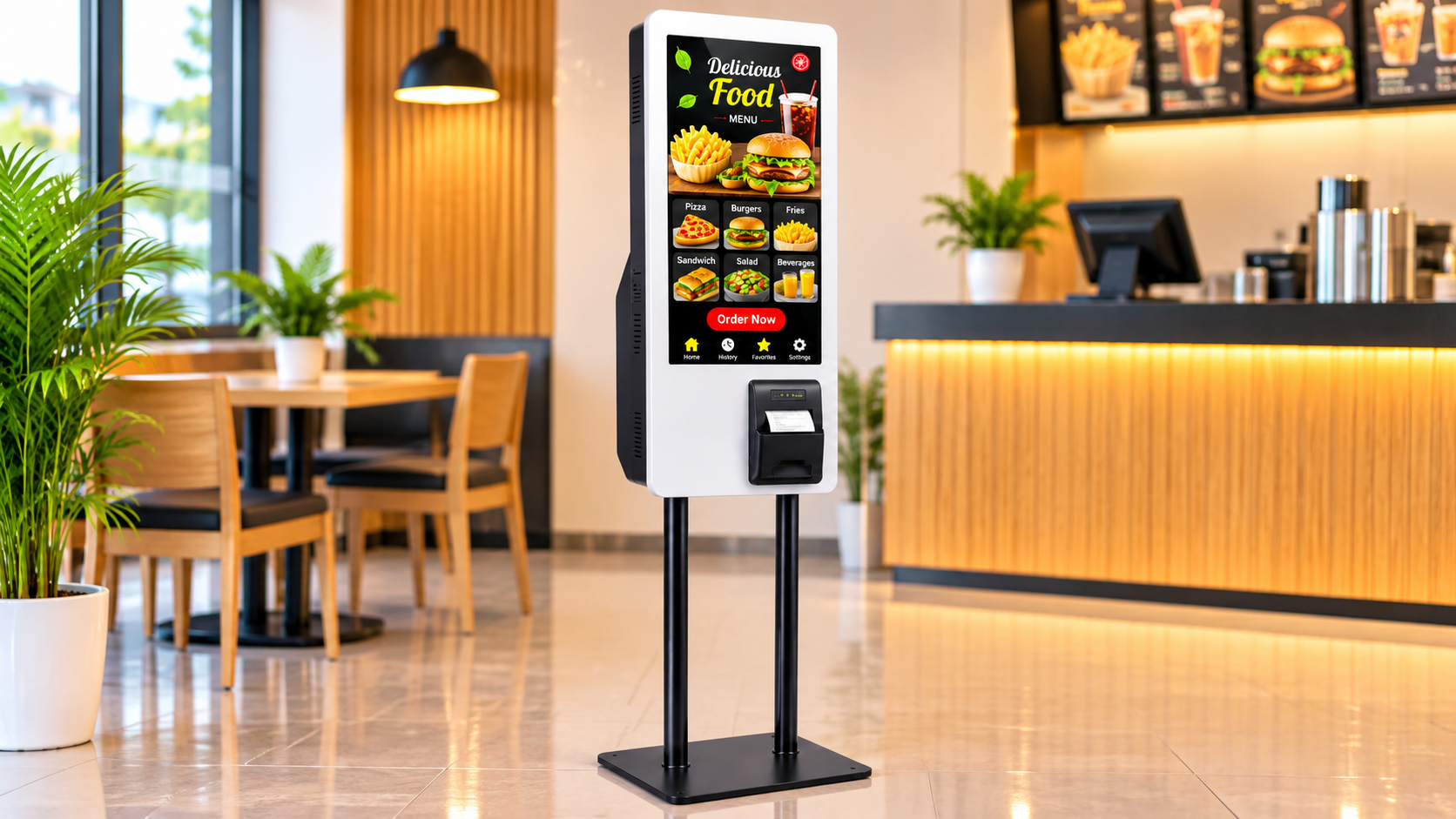
Long queues and manual order-taking can slow down restaurant operations, especially during peak hours. A Restaurant Self-Ordering Kiosk helps customers browse menus, customize meals and place orders through an interactive touchscreen.
From quick-service restaurants to cafes and food courts, self-ordering kiosks offer a convenient way to simplify ordering and improve customer experience.
Before investing, restaurant owners should consider hardware, software, payment options, installation and long-term costs. Here are seven important factors to consider.
1. Understand Your Restaurant's Ordering Requirements
Identify your restaurant's needs before selecting a kiosk.
- Are customers waiting in long queues?
- Do you experience high order volumes?
- Do you want to reduce manual order-taking?
- Do customers need easy food customization?
Choose a kiosk based on your restaurant type, customer traffic and daily ordering requirements.
2. Choose the Right Screen Size and Display
The touchscreen display should provide a comfortable and easy ordering experience.
- Screen Size: Select according to available space.
- Touch Responsiveness: Ensure accurate touch response.
- Display Quality: Choose a clear, readable screen.
- Screen Orientation: Select portrait or landscape based on your needs.
3. Check POS and Software Integration
Your kiosk should integrate smoothly with your existing Point of Sale (POS) system.
Check the following:
- POS software compatibility.
- Automatic order synchronization.
- Menu and price updates.
- Order tracking and management.
- Software customization and support.
Proper integration helps reduce manual work and streamline restaurant operations.
4. Consider Payment Options
Choose a kiosk that supports the payment methods your customers prefer.
- UPI payments.
- Debit and credit cards.
- QR code payments.
- Other supported digital payment methods.
Check payment gateway compatibility, security and processing requirements before purchasing.
5. Focus on a User-Friendly Interface
A simple interface helps customers place orders without confusion.
Look for features such as:
- Clear menu categories.
- High-quality food images.
- Readable item names and prices.
- Easy food customization.
- Simple cart and checkout options.
- Language options where supported.
6. Evaluate Build Quality, Installation and Maintenance
A restaurant kiosk should be durable and suitable for regular daily use.
Consider the following:
- Durable cabinet and display.
- Stable floor-standing or countertop design.
- Proper cable management.
- Suitable ventilation.
- Easy cleaning and maintenance.
- Technical support and spare parts availability.
Also check installation space, power supply and network connectivity.
7. Compare Total Cost and Long-Term Value
Don't consider only the initial purchase price. Evaluate the complete investment.
- Kiosk hardware cost.
- Software and licensing charges.
- Payment terminal integration.
- Receipt printer and accessories.
- Installation and transportation.
- Warranty and maintenance.
- Technical support.
Choose a solution that meets your requirements, offers reliable performance and provides long-term value.
Benefits of Self-Ordering Kiosks for Restaurants
Self-ordering kiosks can provide several operational benefits:
- Reduced customer waiting time.
- Convenient ordering experience.
- Less manual order-taking.
- Improved order accuracy.
- Better digital menu presentation.
- Opportunities for additional sales through suggested items.
Results depend on implementation, software integration and customer adoption.
How to Choose the Right Self-Ordering Kiosk for Your Restaurant
The right kiosk depends on your restaurant size, customer traffic, available space, software requirements and budget.
Compare kiosk models, hardware specifications, software compatibility and after-sales support before making your decision.
Redwolf Media offers touchscreen kiosk solutions for different business applications, including customized self-service requirements.
Conclusion
A restaurant self-ordering kiosk can simplify ordering and improve customer convenience.
Before purchasing, carefully evaluate screen size, POS integration, payment options, hardware quality, installation and overall cost.
Choosing the right solution can help your restaurant create a smoother and more convenient ordering experience.
Looking for a Restaurant Self-Ordering Kiosk?
Explore touchscreen kiosk solutions from Redwolf Media and discuss your restaurant's requirements with our team.
Contact Redwolf Media today to find a suitable self-ordering kiosk for your business.
Require Technical BOQ & Factory Pricing?
Request a customized architectural specification document with lumen calculation, Novastar processor mapping, and turnkey installation across South India.